
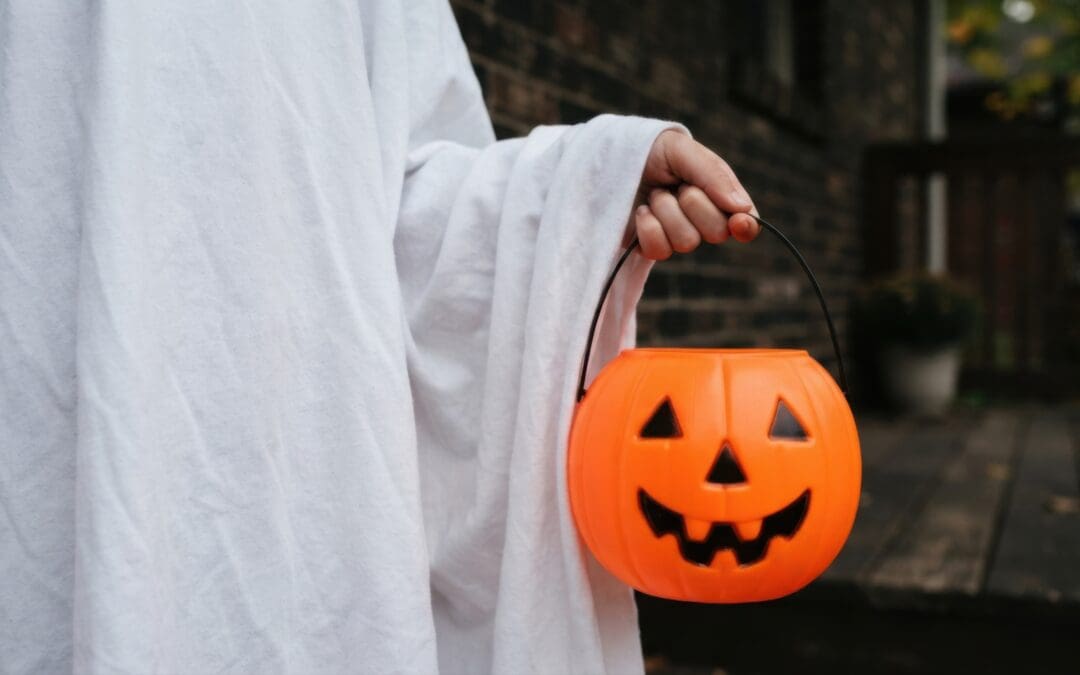
Halloween candy doesn’t have to be banned from your house to keep your family’s teeth healthy.
Every October, parents ask us some version of the same question: “How bad is all this candy for my kids’ teeth?”
The answer is a little more nuanced than simply saying sugar causes cavities. The type of candy matters, but so does how often your child eats it and how long it stays in contact with the teeth.
For families in Naperville and the surrounding area, here are some practical ways to enjoy Halloween without turning October into a month-long sugar marathon.
Why Does Halloween Candy Increase the Risk of Cavities?
Sugar itself doesn’t simply “eat away” at a tooth.
The process involves bacteria in dental plaque. When those bacteria are exposed to sugars and other fermentable carbohydrates, they produce acids. Those acids lower the pH around the teeth and can pull minerals out of the enamel.
Saliva helps neutralize those acids and allows the mouth to recover.
That’s why frequency matters so much.
Eating several pieces of candy around one time exposes the teeth to sugar, but then gives the mouth time to recover. Eating one piece every 20 or 30 minutes throughout the afternoon repeatedly exposes the teeth to another acid-producing cycle.
From a dental standpoint, we’d generally rather see a child enjoy a few pieces of Halloween candy after dinner than carry a candy bag around all evening and snack from it continuously.
Which Halloween Candy Is Better for Your Teeth?
If you’re staring at a bucket containing 15 different types of candy, some choices are easier on the teeth than others.
Chocolate Is Usually One of the Better Choices
Plain chocolate tends to clear from the teeth relatively quickly compared with sticky candy.
That doesn’t make chocolate “healthy” for teeth. It still contains sugar. But if a child is going to have a treat, a small piece of chocolate eaten with or shortly after a meal is generally preferable to a sticky candy that remains in the grooves and between the teeth.
Dark chocolate may also contain less sugar than some milk chocolate products, depending on the particular product.
Sticky and Gummy Candy Can Be More Problematic
Gummy bears, fruit chews, caramels, taffy and similar candies tend to stick around.
That’s the problem.
Pieces can become packed into the grooves of the back teeth or between teeth and remain there much longer than something that dissolves or washes away relatively easily.
Children with deep grooves in their molars, orthodontic appliances, or a history of frequent cavities may need to be especially careful with sticky candy.
Sour Candy Has Another Issue: Acid
Sour candies can be a double challenge because many contain both sugar and dietary acids.
Acidic foods can temporarily soften the surface of tooth enamel. The American Dental Association recommends waiting before brushing after consuming highly acidic foods so saliva has an opportunity to neutralize the acids and the enamel can begin to reharden.
After sour candy, rinsing with water is a simple first step. Don’t feel that your child needs to immediately run to the bathroom and scrub their teeth.
Hard Candy Can Stay in the Mouth a Long Time
Lollipops and other hard candies may slowly dissolve over many minutes, which can prolong the teeth’s exposure to sugar.
There’s also a mechanical concern. Biting down on very hard candy can chip or fracture a tooth or restoration.
We occasionally see patients with broken teeth who tell us, “I knew I shouldn’t have bitten down on it.”
If you’re eating hard candy, let it dissolve rather than crunching it.
A Simple Halloween Candy Strategy for Parents
You don’t need to make Halloween stressful.
Let your kids enjoy trick-or-treating. When they get home, have them sort through their candy and choose some favorites.
Then put the candy away.
Rather than allowing unrestricted grazing throughout the day, consider having a small amount with or shortly after a meal. The American Dental Association specifically recommends enjoying Halloween treats around mealtime because saliva production increases during meals and helps clear food debris and neutralize acids.
Water is a good drink to have afterward.
If your child is old enough to safely chew gum, sugar-free gum can also help stimulate saliva. The ADA notes that chewing sugar-free gum for about 20 minutes after eating can help increase saliva flow.
Don’t Forget the Basics After Halloween
Halloween isn’t usually what causes a cavity by itself.
Cavities develop over time and are influenced by several factors, including diet, oral hygiene, fluoride exposure, saliva, tooth anatomy and a person’s individual cavity risk.
The fundamentals still matter:
- Brush twice a day with fluoride toothpaste.
- Clean between the teeth daily once the teeth are contacting each other.
- Try to limit how frequently teeth are exposed to sugary foods and drinks throughout the day.
- Keep up with regular dental examinations and professional cleanings based on your dentist’s recommendations.
For younger children, parents often need to help with brushing. Kids may be enthusiastic about brushing their own teeth long before they have the dexterity to clean them thoroughly.
What About Brushing Right After Eating Candy?
For most ordinary sweets, maintaining the normal brushing routine is more important than racing to the toothbrush immediately after every piece of candy.
Sour candy is different because of its acidity.
After eating something highly acidic, rinse with water and give your saliva some time to work. The ADA advises waiting about an hour before brushing after acidic foods.
At bedtime, make sure the teeth are thoroughly brushed with fluoride toothpaste and cleaned between the teeth as appropriate.
And once bedtime brushing is finished, the candy is finished for the night too.
What If My Child Already Gets Cavities Easily?
Not every child has the same cavity risk.
Some children can have similar diets and brushing habits but very different dental histories. Deep pits and grooves, enamel differences, dry mouth, orthodontic appliances, previous cavities and oral hygiene can all affect risk.
A child who has had several cavities may benefit from a more individualized prevention plan. Depending on the situation, we may discuss brushing technique, fluoride, diet, dental sealants or other preventive measures rather than simply telling a family to “eat less sugar.”
That’s an important distinction. Good preventive dentistry should be based on the individual patient.
When Should You Call a Dentist?
A toothache after Halloween shouldn’t automatically be blamed on candy.
Sensitivity to sweets can sometimes be associated with tooth decay, exposed tooth structure, a leaking or damaged restoration, or other dental problems. Pain when biting can have several possible causes as well.
Call a dentist if you or your child develops persistent tooth pain, significant sensitivity, swelling, a broken tooth or a lost filling.
A tooth that breaks while biting hard candy should also be evaluated. Even if it doesn’t hurt, the amount and location of the fracture determine what treatment, if any, is needed. Our guide to a broken filling or broken tooth explains what to do next.
Facial swelling, difficulty swallowing or breathing, significant trauma, uncontrolled bleeding, or rapidly worsening symptoms require prompt professional evaluation and may require emergency medical care. Learn more about emergency dental care in Naperville.
How Pebblewood Dental Can Help
At Pebblewood Dental, we take a practical approach to prevention.
We’re not going to tell families in Naperville that their children can never eat candy. Instead, we want parents and kids to understand how cavities develop and what small habits can make a meaningful difference.
During an examination, we can look for early signs of decay, evaluate existing fillings, assess areas that may be difficult to clean and discuss your child’s individual cavity risk.
For families around Naperville, Warrenville, Aurora and the Route 59 area, Halloween can still include trick-or-treating and favorite candy. A little planning, good home care and regular preventive dental visits can go a long way.
To schedule a visit for your child or family, call 630-369-6222 or book online.
Dr. Mendiola and the Pebblewood Dental team provide general, family, restorative, cosmetic, emergency, and implant dentistry in Naperville, IL. This article is for educational purposes and should not replace a dental examination or personalized treatment recommendation.