
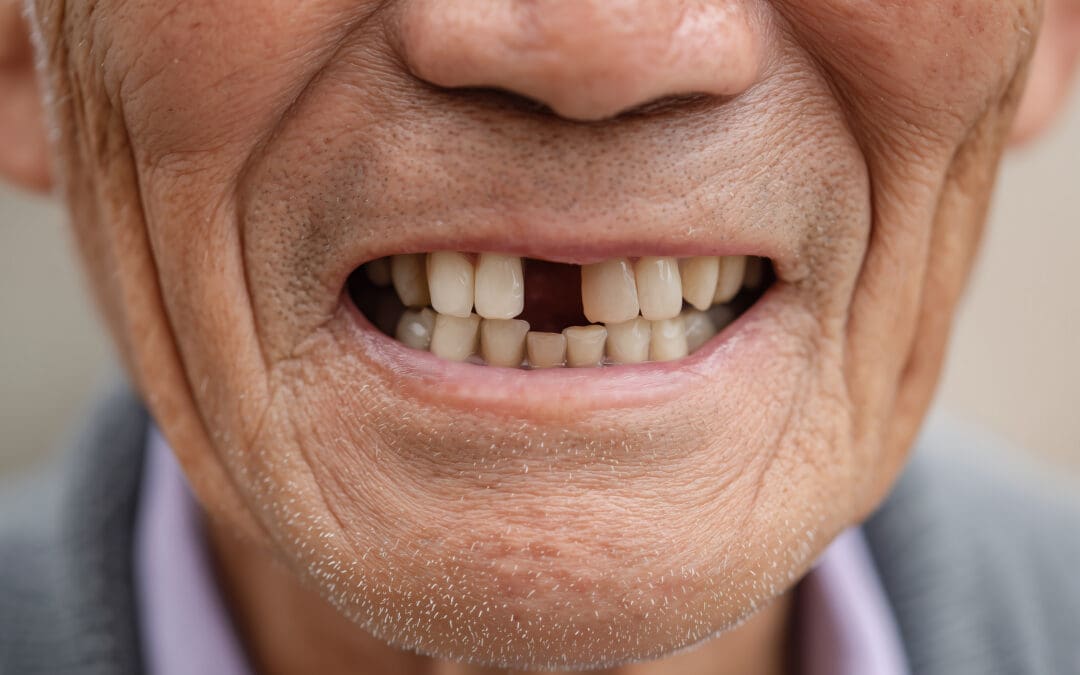
If you are missing a tooth—or have been told that a tooth may need to be removed—you may find yourself comparing two common options: a dental implant or a dental bridge.
Both can replace a missing tooth, restore function, and help complete your smile. But they work in very different ways, and the better choice depends on much more than simply deciding which treatment sounds more appealing.
At Pebblewood Dental in Naperville, we often help patients compare tooth replacement options based on the health of their remaining teeth, gums and bone, their bite, treatment timeline, personal goals, and budget.
If you live in Naperville, Warrenville, Aurora, Lisle, Woodridge, the Route 59 area, or a nearby community and are wondering about a dental implant vs. bridge, understanding the basic differences can help you have a more productive conversation with your dentist.
What Is a Dental Implant?
A dental implant replaces a missing tooth from the root upward.
The implant itself is a small post placed into the jawbone. After the surrounding bone heals around the implant, an abutment and dental crown can be attached to create the visible replacement tooth.
Unlike a traditional bridge, a single-tooth implant usually does not require the neighboring teeth to be reshaped simply to support the missing tooth. Dental implants can also be used in other ways to support multiple missing teeth or certain types of dentures.
Implant treatment generally involves several stages and may require a healing period before the final restoration is completed. Depending on the individual situation, additional procedures such as bone grafting may also be considered.
Learn more about how dental implants in Naperville are planned and placed at Pebblewood Dental.
What Is a Dental Bridge?
A traditional dental bridge replaces the missing tooth by connecting an artificial replacement tooth to teeth next to the open space.
These supporting teeth are typically prepared for crowns, which hold the bridge securely in place. The replacement tooth between them fills the gap.
A bridge is fixed in the mouth, meaning that you do not remove it for cleaning. The teeth and gums around and underneath the bridge still require careful daily hygiene.
The American Dental Association describes a fixed bridge as a restoration that fills a space left by missing teeth and relies on surrounding teeth for support.
Learn more about our approach to crowns and bridges at Pebblewood Dental.
Dental Implant vs. Bridge: The Main Differences
Here is a simple way to compare the two options:
| Consideration | Dental Implant | Traditional Bridge |
| Support | Supported by an implant in the jawbone | Supported by neighboring teeth |
| Neighboring teeth | Usually does not require healthy adjacent teeth to be crowned | Supporting teeth generally need to be prepared for crowns |
| Surgery | Requires implant placement surgery | Does not require implant surgery |
| Treatment time | Often includes a healing period | Can often be completed without an implant-healing phase |
| Missing tooth root | Replaces the root as well as the visible tooth | Replaces the visible missing tooth but not its root |
| Cleaning | Requires brushing, flossing and ongoing professional care | Requires cleaning around the supporting teeth and underneath the bridge |
| Candidacy | Depends partly on bone, gums, medical history and healing | Depends partly on the condition and strength of supporting teeth |
| Financial considerations | Depends on the individual treatment plan | Depends on the individual treatment plan |
Neither option should automatically be considered “better” for every patient.
The ADA recommends that patients receive a comprehensive examination and discuss available options based on their oral health, needs and preferences before choosing treatments such as bridges or implants.
When Might a Dental Implant Make Sense?
A dental implant may be worth considering when the neighboring teeth are healthy and you would prefer to avoid preparing them for a bridge.
Implants may also appeal to patients who want a tooth replacement that is supported independently rather than relying on adjacent teeth.
Another potential advantage is that an implant replaces the missing tooth root. Because an implant is positioned in the jawbone, it can help maintain bone support in that area.
However, implant treatment is not appropriate for everyone.
Bone quantity and quality, gum health, medical conditions, tobacco use, medications, bite forces, healing ability, and the location of nearby anatomical structures can all influence treatment planning.
The ADA notes that overall health and conditions that affect healing should be considered when determining whether implant treatment is appropriate.
If you’re still not sure whether dental implants may be right for you, our related article walks through how that decision gets made.
When Might a Dental Bridge Make Sense?
A traditional bridge can be a very reasonable treatment in the right situation.
For example, if the teeth next to the missing tooth already have large restorations or would benefit from crowns for other reasons, using those teeth to support a bridge may fit naturally into the overall restorative plan.
A bridge may also appeal to someone who wants to replace a missing tooth without implant surgery or who prefers a treatment plan that does not involve waiting for an implant to integrate with the bone.
The health and strength of the supporting teeth are important. Because those teeth carry the bridge, they need to be evaluated carefully.
This is why looking at the entire mouth—not simply the empty space—is so important.
What About the Teeth Next to the Missing Tooth?
This is one of the most important questions when comparing a bridge vs. implant.
Imagine that you are missing one tooth but the teeth on either side are completely healthy and have never needed large restorations.
An implant may allow those neighboring teeth to remain largely untouched.
Now imagine the same missing tooth, but the neighboring teeth already have extensive fillings, cracks, or other conditions that may make crowns appropriate.
In that situation, a bridge may deserve stronger consideration.
The right decision depends on what is happening with all three positions: the missing tooth and the teeth on either side of it.
Does a Dental Implant Last Longer Than a Bridge?
It is tempting to compare implants and bridges by asking which one “lasts longer,” but individual outcomes vary too much to promise a specific lifespan.
Both implants and bridges require maintenance.
Implants still need healthy surrounding gums, consistent home care, professional cleanings, and routine monitoring. Bridges depend heavily on keeping the supporting teeth and surrounding gum tissue healthy.
Decay affecting a supporting tooth, gum disease, excessive bite forces, grinding or clenching, smoking, hygiene habits, and other factors can influence how well either restoration performs over time.
Instead of choosing based only on a projected number of years, it is better to consider which treatment provides the most appropriate foundation for your individual mouth.
How Do You Clean an Implant Compared With a Bridge?
A single implant crown is generally cleaned much like a natural tooth, although your dentist or hygienist may recommend specific floss or cleaning aids for the area.
A bridge requires cleaning underneath the artificial replacement tooth in addition to brushing around the supporting crowns. Floss threaders, interdental brushes, water flossers, or other cleaning aids may be recommended depending on the design of your restoration.
Whichever treatment you choose, good home care and regular dental visits remain important.
Which Option Costs More?
Cost is understandably an important part of the decision.
There is no single answer because the total cost depends on your individual situation.
An implant treatment plan may include the implant, surgical placement, imaging, possible grafting, an abutment, and the final restoration. A bridge involves treatment of the supporting teeth and fabrication of the bridge itself.
Insurance benefits can also differ considerably between plans.
Rather than choosing based only on the initial price, it can be helpful to compare:
- What treatment each option requires
- Whether neighboring teeth also need treatment
- Whether bone grafting is necessary
- Expected maintenance
- Insurance benefits
- Estimated out-of-pocket costs
- Financing or payment options
- Your long-term restorative goals
For a closer look at what drives pricing, see our breakdown of dental implant cost in Naperville.
At Pebblewood Dental, we believe patients should understand their treatment choices and estimated financial responsibility before deciding how they would like to proceed. Our current patient resources also include information about financing and an in-office dental savings plan.
What If You Are Missing More Than One Tooth?
The comparison changes when several teeth are missing.
Depending on the location and number of missing teeth, possibilities may include a traditional bridge, implant-supported bridge, partial denture, individual implants, or another restorative approach.
Dental implants do not necessarily mean placing one implant for every missing tooth. In certain cases, strategically positioned implants can support multiple replacement teeth.
A personalized examination is needed to determine which options are realistic.
When Should You Call a Dentist About a Missing or Failing Tooth?
Consider scheduling an evaluation if you:
- Have already lost a permanent tooth
- Have a broken or severely damaged tooth
- Have been told a tooth may need extraction
- Have difficulty chewing because of a missing tooth
- Notice nearby teeth shifting toward an empty space
- Have an older bridge that feels loose or uncomfortable
- Want to compare an implant with a bridge before making a treatment decision
If you have significant facial swelling, fever associated with dental swelling, uncontrolled bleeding, difficulty swallowing, difficulty breathing, or another potentially serious symptom, seek prompt dental or medical attention.
How Pebblewood Dental Can Help You Compare Your Options
At Pebblewood Dental, our goal is not to automatically steer every patient toward an implant or a bridge.
Instead, we want you to understand why one option may make more sense for your particular situation.
Your evaluation may include a clinical examination, dental X-rays, and when appropriate, three-dimensional CBCT imaging or digital scanning. Pebblewood Dental currently uses CBCT and intraoral scanning technology as part of its dental treatment capabilities.
We can then discuss questions such as:
- Are the neighboring teeth healthy?
- How much bone is available?
- Are the gums healthy enough to support treatment?
- Would either adjacent tooth benefit from a crown?
- What does your bite look like?
- Is implant surgery appropriate for you?
- What timeline are you comfortable with?
- What financial considerations are important to you?
Sometimes the answer is an implant. Sometimes a bridge makes more sense. And in other situations, there may be additional alternatives worth discussing.
The goal is to give you enough information to make a comfortable, informed decision about replacing your missing tooth.
For more information on replacing missing teeth and other dental topics, visit our Dental Learning Center.
Frequently Asked Questions
Is a dental implant better than a bridge?
Not necessarily. Dental implants and bridges can both be good tooth replacement options. An implant may be attractive when the neighboring teeth are healthy because it can replace a tooth without using those teeth for support. A bridge may make sense when neighboring teeth already need crowns or when implant treatment is not preferred or appropriate.
Is a bridge faster than a dental implant?
A bridge generally does not require the bone-healing period associated with implant placement, so treatment may be completed sooner in many cases. Your actual timeline depends on the condition of your teeth, gums, bone, and any additional treatment required.
Do you have to shave down healthy teeth for a bridge?
A traditional bridge normally requires the supporting teeth on either side of the missing tooth to be prepared for crowns. A single-tooth implant generally does not require neighboring teeth to be prepared simply to support the replacement tooth.
Can I get an implant if I have bone loss?
Possibly. The amount and location of available bone need to be evaluated. Some patients may benefit from bone grafting or other treatment, while other situations may make a different tooth replacement option more appropriate.
Are dental implants harder to clean than bridges?
Both require good home care. Implant crowns are generally brushed and cleaned around similarly to teeth, while bridges require special attention underneath the replacement tooth and around the supporting teeth. Your dental team can recommend the appropriate floss or cleaning aids for your restoration.
How do I know whether I need a bridge or an implant?
The best way to decide is through a dental examination. Your dentist can evaluate the missing-tooth area, neighboring teeth, gums, bone, bite, health history, treatment goals, timeline, and financial considerations and explain the advantages and limitations of each option.
Compare Dental Implants and Bridges in Naperville
If you are missing a tooth, have a tooth that may need to be removed, or simply want to understand your tooth replacement options before making a decision, Pebblewood Dental can help.
Our team will evaluate your situation, explain reasonable treatment options clearly, and help you compare the benefits, limitations, timeline, and financial considerations of a dental implant, bridge, or other appropriate solution.
Call Pebblewood Dental at 630-369-6222 or schedule an appointment online to discuss your tooth replacement options.
Dr. Mendiola and the Pebblewood Dental team provide general, family, restorative, cosmetic, emergency, and implant dentistry in Naperville, IL. This article is for educational purposes and should not replace a dental examination or personalized treatment recommendation.